
Cartons, pallets and container loading: where drinkware freight cost is really decided
Drinkware is a low-density cargo: you are paying to ship the air inside the bottles. On a typical bottle order, freight and packaging together can be a fifth of the landed cost, and most of that is decided before anyone quotes a carton.
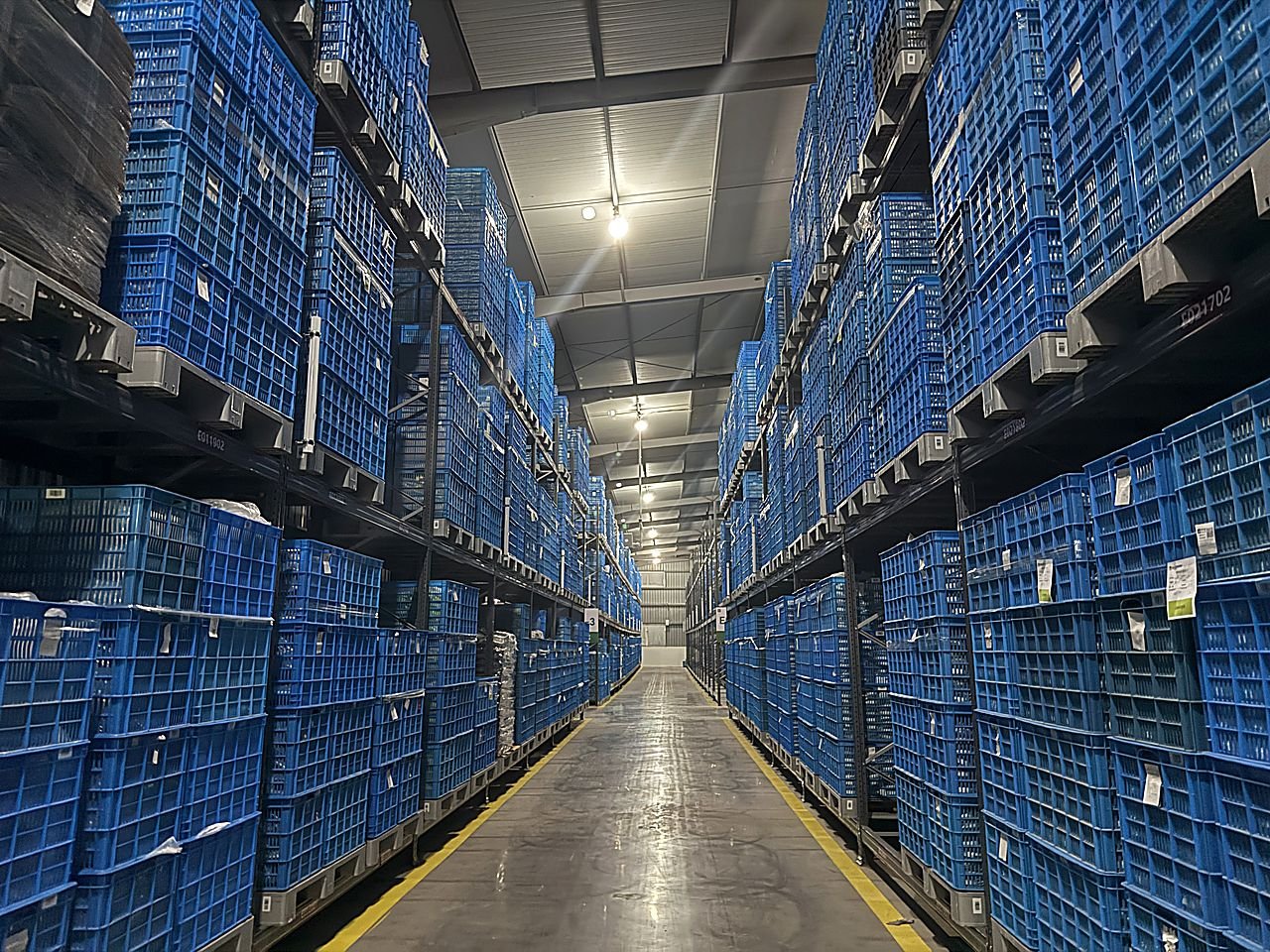
Volume, not weight, fills the container
A 40HQ holds about 68 m³ and roughly 26 tonnes. A container of plastic bottles hits the volume limit long before it comes near the weight limit — typically at 8 to 11 tonnes. That means every centimetre of empty space inside a carton is paid freight.
The useful number is not pcs per carton, it is pcs per cubic metre. Ask any supplier for that figure and you can compare two quotes that use different carton sizes.
Nesting is worth more than any packing trick
A straight-sided tumbler that nests inside the next one can ship two to three times the pieces per cubic metre of the same tumbler with a fixed handle. A slight draft angle on the body, designed in at the drawing stage, is what makes nesting possible.
If your programme is price-sensitive and the shape allows it, ask for a nesting version. It costs nothing extra in tooling and it is the single largest lever on landed cost we can offer.
Lids and accessories should travel separately
Shipping a bottle with the lid screwed on wastes the entire neck volume. Packing lids in their own layer or their own inner box, and letting the customer or the packer assemble, often gains 15 to 25 percent on carton volume.
The trade-off is assembly labour at your end or ours. For retail-ready programmes assembled and polybagged is usually right; for bulk and promotional programmes, separate almost always wins.
Carton size is a standards question, not a preference
A carton that does not divide neatly into a 1200 × 1000 mm pallet footprint wastes space twice — once on the pallet and once in the container. We work back from the pallet, then to the carton, then to the inner packing, rather than the other way round.
Five-layer corrugated is standard for export drinkware; three-layer is fine for a light single-wall bottle going by sea in a full container, and not fine for anything that will be handled loose.
Confirm the carton data before you book
Carton dimensions, gross weight, net weight and pcs per carton go on the packing list, the bill of lading and the customs entry. A number that changes after booking means an amended bill of lading and, in some destinations, a delay at clearance.
We confirm carton data from the actual packed cartons before the booking is made, not from the drawing. On a mixed order this matters more than it sounds — a single wrong carton height changes the pallet count and the whole loading plan.