
How to spec a protein shaker bottle a gym brand will actually reuse
A shaker looks like the simplest thing we make. It is not. Six decisions taken at the drawing stage decide whether your customer refills it every day for two years or throws it out after a month — and every one of them changes the tooling.
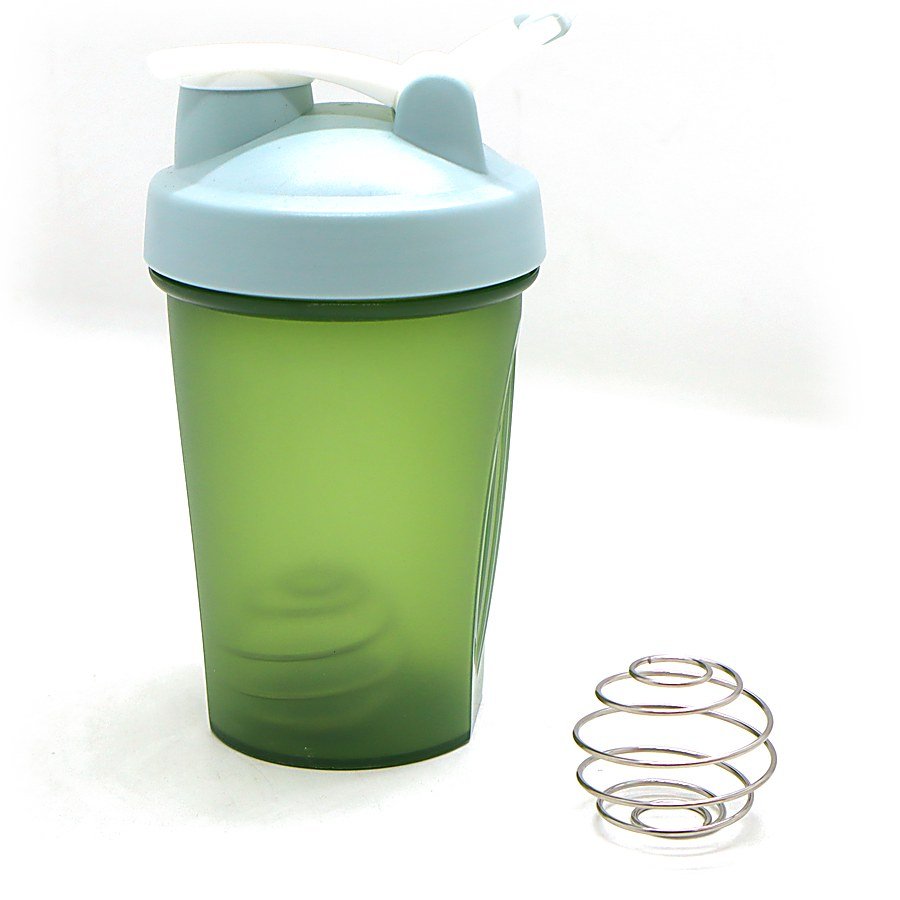
Start with the real capacity, not the printed one
A 600 ml shaker is not 600 ml of usable volume. The mixing ball needs room, the powder needs room to move, and the lid intrudes into the neck. Our 600 ml body is moulded at roughly 700 ml brimful so that 600 ml of liquid still shakes properly with 30 g of powder in it.
Tell us the working volume you want on the label and let us set the brim volume. If you specify brim volume instead, the bottle will feel a size too small to the person using it, and that is the single most common complaint we see on gym shakers.
Thread pitch decides whether it leaks
Most leaks are not gasket failures. They are cross-threading — the user screws the lid on at an angle, the coarse thread jumps, and the seal never seats. A finer, multi-start thread with a lead-in chamfer lets the lid find the thread from any angle and pull down square.
This is a mould decision, not an assembly decision. Changing the thread after the tool is cut means a new neck insert. We check the thread profile on the 3D file before we quote.
Pick the mixing system for the powder, not for the photo
A wire spring ball is cheap, quiet and works well with whey. A plastic mixing grid mounted under the lid handles thicker mass gainers and mixes without the rattle that some end users dislike. A perforated agitator disc sits between the two.
Whichever you choose, it must survive a dishwasher cycle and it must not be able to sit in the neck and block the drinking spout. We drop-test every mixing system in the assembled bottle before sampling.
The seal is two parts and both matter
The lid gasket takes the pressure when the bottle is shaken. The spout flap takes the pressure when it is in a bag. Silicone holds its shape longer than TPE for the gasket; TPE is fine for the flap and costs less.
Ask for a food-contact statement on both. They are separate materials from separate suppliers, and a compliance file that only covers the bottle body is not a complete file.
Compartments add cost in tooling, not in resin
Stackable storage jars and pill trays are what turn a shaker into a gift-set item, and they are the reason a buyer will pay two dollars more. But each one is a separate tool with its own thread, and it doubles the assembly labour.
If the programme is price-driven, a single-compartment shaker with a good thread and a good print will outsell a three-piece stack. If the programme is a promotional or retail gift, the stack is what gets picked up off the shelf.
Leave room for the print before you design the shape
Screen and pad printing need a flat or gently curved area, no parting line and no measurement marks crossing the artwork. A logo that wraps across a rib or a scale line will always look wrong, and we cannot fix it at the printing stage.
Send us the artwork with the enquiry, not after the tool is cut. Moving a scale marking or a rib on the drawing costs nothing; moving it on a finished mould costs a new insert and two weeks.